Wednesday, 13 March 2013

Formal Wear And Grooming Tips For The Coporate Woman


GENERAL TIPS

  • Most companies do not like to see their employees wear jeans, shorts, capris, tee shirts, sneakers, open shoes and slippers to work. However, these days, different organizations explain “casual” in a different way. Dress according to what is OK with your organization.
  • If you are travelling or working or visiting a client’s organization, make sure you are aware of the dress code prevalent in that country or organization.
  • Wear well fitted clothes.
  • Make sure your clothes are clean and ironed.


FORMAL WEAR FOR WOMEN

Western Wear

  • Formal trousers in grey, black, brown and blue are the most common. Other colors like purple, bottle green and khaki are also becoming increasingly accepted. Light colours like white and cream look very good if you can manage to keep them look clean for a whole day.
  • Trousers should cover your foot and a bit of your shoe heels.
  • A closed shoe in single color with heels (upto3 inches) is formal. Wear shoes to match your suit or clothes. Peep toe shoes are also acceptable. Shoes could be open on the top of your foot, slip on or with laces. A shoe with laces should not have open or uneven laces.
  • Shoes should be polished and clean at all times.
  • Sneakers, flip-flops,open sandals and extremely high heels and fashion shoes are not allowed.
  • Business suit (jacket and trouser, the same color) in dark shades, trousers or straight cut skirt .Blouse under the jacket could be white or any other light color. 
  • Shirts and blouses may be sleeveless (but not revealing), half sleeves and full sleeves. Co-ordinate the shirt colors with the trousers.Stripes, small prints are ok but extremely bright shades and loud prints should be avoided
  • Avoid very high heels and fashionable footwear.
  • A hose in skin color, blue or black is good to wear with trousers and shoes where your upper foot is seen. When wearing a skirt, a hose is not compulsory. Make sure that the hose is not loose and doesn’t have a ladder. Avoid colored, sequined, patterned hoses.
  • Women may wear ties if they like but this is optional. 
  • Scarves worn with shirts and sweaters look good. Again, take care to color co-ordinate.
  • DO NOT WEAR low cut blouses, backless blouses or transparent shirts.
  • DO NOT WEAR mini skirts, jeans, shorts, slit pants/skirts, gowns, large bell sleeves, frills, bows, big buttons, loud patterns, multicolored fluorescent shades.
  • DO NOT WEAR tight fitting or provocative clothing.

INDIAN FORMALS

  • Crisp cotton, starched sarees, chiffons and silk saris are formal. Prints should be small and all over. Very loud colors and prints attract attention for the wrong reason. Too much of zari work and shiny sequins that you would wear to parties and to weddings should not be worn for work. Saree blouses should not be fashionable. Sleeveless blouse is allowed.
  • Salwar/kameez and churidar kameez with dupatta in small prints and tailored to fit is considered formal. Cotton wear should be ironed and duppattas neatly pinned up.
  • Simple sandals and chappals comfortable length heels look good. Open shoes are also ok.
  • Footwear should match the clothes you wear. Black, brown and white footwear can be co-ordinated with most colors of clothes.
  • No provocative dressing.
  • No display of high level fashion dressing.

CASUAL WEAR

  • “Dress in casuals” at work does not mean you can wear your sweat pants or pyjamas to work.
  • Casuals are usually worn on Fridays or weekends to work.Also, you can wear casuals for an office informal get-together, outing or meeting on a holiday.
  • Even though you are allowed to wear casuals, wear clothes, bearing in mind that you are with the same set of people you work with.
  • Casual wear means wearing what you would wear while going out after working hours. This means jeans and short tops, sneakers and sandals and Indian wear.Remember,you still have to work: do not wear clothes that interfere with work
  • Do not wear provocative and revealing clothes
  • For an evening informal get-together of staff or dinner meeting at a client’s place, wear an evening dress or Indian wear that may be slightly more colourful and showy than formal wear.

MAKE-UP, ACCESSORIES and GROOMING

  • Long hair should be tied, braided or put up in a neat bun. Do not have hair styles that have hair falling over your face. Do not wear colorful, large or beaded hair accessories.
  • Jewellery should be minimum and matching with your costume. Long dangling ear-rings, too many rings, bracelets and bangles that make a lot of noise should be avoided.
  • Wear minimum make up. Light foundation, eyeliner and light colored lipstick is ideal. If you are wearing a bindi, make sure it is not over decorative.
  • Nails must be trimmed regularly. Do not keep very long nails. Light nail polish on medium length nails look good. Avoid extremely bright or sparkly nail polish. Chipped off nail polish looks bad.
  • A simple watch is a good accessory to have. 
  • Wear light perfume or deodorant.
  • Wear simple anti-glare eyeglasses if you are using glasses. Do not wear dark glasses inside the room. 


Wednesday, 30 January 2013

Enhance The Impact Of Your Presentations Through Effective Visual Aids


Visual aids should never “replace” your presentation--- you must display your materials visually in such a manner that it does not distract your audience from your argument. Some of the visual aids are listed below:

Power Point Presentation

This is the most commonly used visual aid used in modern day presentations. Although many features are available in a power point, make sure you make the slides as simple and legible as possible. Small fonts, using dark or multi-colored backgrounds, font colors that clash with the background, too many pictures or images on a slide—all these make a slide illegible and difficult to understand. Fonts should be minimum 20 points in size and a dark color over a light background usually looks quite good, depending on the colors that you use.

             A complicated dark colored font on a dark background makes the slide unreadable.

Make sure that each slide adds to your presentation. Do not have slide after slide with bullet points of what you are going to say. Your visual aid does not then say anything extra and will get too boring. You can illustrate a point with a large picture or a drawing or a graph so that what you are describing becomes simple to understand. You could have a slide with just a sentence or a word in large font to emphasize your core argument or theme.

                                        A single sentence can create a huge impact 

Pictures and graphs


Be creative in your choice of pictures and graphs. Graphs are meant to present data in a simplified manner. Make sure your graphs are not crowded with too much information.Instead, present one idea per graph. Do not crowd the entire slide with too many pictures and captions. Your audience will get distracted from your presentation trying to make sense of the pictures.Also, make sure the colors used do not clash with the background and the images are visible to the audience.

                              Too much information on one slide distracts the audience

Flip Charts

Flip charts follow the same rules as power point slides. The drawings or writing on the sheets should be large and legible from a distance. Place the flip chart where everyone can see. You will have to create images according to the size of the audience. In a small group flip charts work very well since the distance between you and the audience is not too much. If you wish to write on the chart as you speak, make sure you use bright colored markers and write in large letters. It will be a good idea however, to prepare the flip chart before the presentation so that much time is not spent in writing.

White board

You can use a whiteboard to explain a concept. Do not turn your back to the audience while you write or draw. Use the whiteboard sparingly and keep looking at the audience every 10 seconds to make sure they are following you. Write legibly and use bright colored markers.

Video tapes

You may play a film your audience but make sure it is done only to illustrate your point. Do not use a video instead of a presentation –this will make your presence redundant. Playing a very long film might put your audience to sleep. It is a good idea to play your film after the presentation to highlight whatever you have presented. This way, your audience can use the information in the video to summarize what you have already said. Also, if they choose not to pay attention, you still would have made an impact before the film and your presentation would not have been wasted. You could also save your question and answer sessions until after the film to make sure that the audience does watch the film in its entirety.

Tuesday, 15 January 2013

OET and TOEFL—English tests to go abroad

The OET and TOEFL are English proficiency tests taken by various English speaking countries such as the UK, USA, Canada, Australia and New Zealand for non-native speakers of the English language looking to migrate to these countries for studies or work.

The OET is restricted to students/jobseekers in the health care space and is accepted only in Australia, New Zealand and sometimes in Singapore. TOEFL is accepted mostly by the USA but may be accepted in many other countries.

The OET is administered by the OET Centre up to 10 times a year and in over 40 locations around the world. The Test measures the language capability of health practitioners who are seeking registration and the ability to practice in an English-speaking context.


In India, for most people, English is a foreign language. The medium of instruction right up to graduation or high school in a majority of areas in India is in the vernacular or the mother tongue of the region where you study. Therefore, it is important to know that if you are not very proficient in English, but have dreams of traveling abroad, brush up your English skills and prepare for these tests.

Before enrolling for any of the tests, please make sure which country/university you are applying to and how much is the score expectation.

The OET and TOEFL, all have four parts to the test—Listening, Reading, Writing and Speaking. You receive results for the four sub-tests that make up the OET as one of five grades – A to E. A is the highest grade, E is the lowest.

TOEFL score will range from 0 to 120 and is calculated by combining your TOEFL scores on each of the four sections.

LISTENING:

The listening test is important because the test takers want to understand if you can follow a conversation or a lecture .These conversations are usually in foreign accents—British, Scottish, American (TOEFL) and Australian or New Zealanders’ (OET).

If you want to practice, watch TV programs/films from English channels, to understand various expressions. Although English is an international language, it is spoken differently in various countries .Familiarize yourself with the way it is spoken in these countries.

READING:

All the tests give at least 2-3 reading passages; about 500-700 words in length and you have to find answers to the questions from the passage. Reading comprehension is an important part of these tests and the key questions will be based on your understanding of the vocabulary and your expertise in gleaning out information from the passages. 

The reading test will carry on for an hour or more, so it might get a bit tiring and difficult for you, even if your English is good.

Practice by reading English newspapers and magazines and books. You can start with simple English reading like small fiction stories and then gradually start reading non-fiction. The passages are taken from scientific, historical or even medical journals (in the case of OET); therefore the reading is pretty heavy and is not very interesting. Make a practice by reading quickly and skimming through information and taking down notes.

Improve your vocabulary by going through the meanings of words you do not know, using a dictionary.

WRITING:

The writing tests come in the form of composing a letter (OET) or an essay (TOEFL).The TOEFL has an integrated writing section where you have to listen to a speaker and read a passage and write an essay on how the listening and reading are related. This is a tough test since this tests your vocabulary, grammar and spellings. Even a good English speaker may not write well.

Since the writing tasks are timed –about half an hour to one hour, the key here is to structure and write down your thoughts in a limited time. Brush up your grammar; practice writing simple essay topics and write letters pertaining to your work or subject—place an order, complaint letter, introductory letter etc. For OET practice by reading case sheets and preparing reference letters on the case.

SPEAKING:

The TOEFL has six speaking tasks out which four are integrated tasks; the OET asks you to participate in a role play between a patient and yourself. The questions may be recordings (as in TOEFL) or asked by a live examiner (OET) .All your answers are taped and analyzed by test examiners later.

As long as you display that you can speak fluently, and understand the task, you will not fail the test.Many candidates do not do well on the test just because they get nervous or tongue-tied and lose time thinking.

Practice speaking with a friend or a person who knows good English. Speak on different topics for five minutes and ask your friend to converse with you on different topics.

Start practice months before the test

1. A mistake most candidates make is to register for the test close to the admission or visa deadline. The downside of this is that if you fail the test, your admission gets cancelled and you lose your registration money. It will be a good idea to take a test date three to six months in advance---that way you will have enough time to prepare and take care of your other course work or studies or office work.

2. Even if you are good in English, never go unprepared. Spend a few weeks, going through the test format and answering questions on your own. Score yourself and see if you are capable of passing the test in the first attempt. If not, give yourself more time. 

3. If you are not good in English, take at least three months to coach yourself. Get yourself a good English teacher to coach you or enroll in a coaching institute.

Once you have enrolled for the test, buy books and CDs---available in the market and practice from them. If your score is below average, enroll for a coaching class. It is not worth losing money over repeated registrations and facing numerous disappointments

Sunday, 6 January 2013

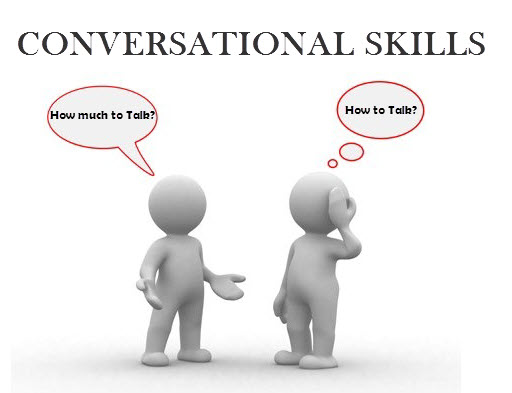
Conversational Skills---How To Talk And How Much To Talk

    A conversation is a spontaneous interaction between two or more people. We all have conversations with family and friends.However, many of us, may be labeled as “boring” if we make long and meaningless conversations. How adept are we in our conversational skills ?

   A good conversationalist “goes with the theme”. If everyone is discussing movies, it would be a good idea, to stick to the topic. Do not go off on a tangent and introduce a topic of your own. Contribute your view points and go with the mood. If it is a fun topic, do not butt in and make it serious. For example, do not become serious and argumentative by theorizing and defending you own point of view. Laugh with the others and present your point of view without either getting offended or offending others.


    Do not interrupt a free flowing conversation between others .Wait for the conversation to end and see if the others are looking at you indicating that you can participate. Sometimes, they may be discussing something private and do not want you to participate. In that case, apologize that you perhaps came in at the wrong time and ask if you can sit around or if they want you to leave. If this is a conversation that you really want to join in, then seek permission. Again, give your point of view but do not get into a disagreement. If someone disagrees with you, you can back off smiling, saying that you beg to differ. You need not insist on your take on the subject, neither do you need to change your viewpoint to suit others.

    It is easier to have conversations within a group of people you know. Yours might be a talkative family, a loud group of friends or just the opposite. You would of course fit into your comfort zone. You may be a talkative person or a quiet one and your friend and family accept you as such. However, a good conversationalist knows how to hold a conversation in an unfamiliar zone. Also, a new friend or a new member of the family should be introduced to the rest of the crowd and gently initiated into the conversation. For example, you can tell them what the conversation is about and introduce the others to him or her. Also, you can tell the others to make the other person comfortable by not talking family secrets or cracking private jokes which only the group is familiar with.

    Does the thought of starting a conversation with a new person or a group worry you?
It might be your first day in a classroom or at work; it could be at a party, workplace or even in a bus, train or plane. You might meet someone for the first time that you are forced to interact with. You could intitiate a conversation by introducing yourself or a topic. On the other hand if someone initiates a conversation, do not get frightened and shy away. You could respond in the same manner.

    Determine whether it is a personal interaction or an impersonal one. For example, if you have just met a person at a railway station it may be possible to have a good ten minute conversation. You may be surprised at the topics you can talk about-- train timings, comforts in the train, other trains, convenience at the railway stations or even the railway minister---without ever divulging your name! Too much information need never be exchanged---for example, you might mention that you live in Kolkota on Park Street but there is no need to mention the full address. There is no need either, to talk about your family, siblings, where they live, study etc.Remember, you are talking to a stranger and it is not a good idea to reveal too much. At the same time, do not ask too many questions out of curiosity. The other person may just shut you off.

    If you meet someone in a familiar zone and you need to maintain a long term relationship with him or her, you can introduce yourself and reveal your name, ask for their name and some other details. Again, do not reveal nor seek more information the first time. Take at least three to four conversations to get to know more about the other person. Do not ask all the questions at the same time. If you feel that the other person is shy draw him or her into your conversation by finding out their area of interest. Do not get put off if the other person seems to be too reserved. Let them be. When they realize that you are not pushing them, they might get more comfortable with you.

When in doubt, talk about the weather: you can never go wrong there!

Tuesday, 18 December 2012

IELTS—English Test To Go Abroad


The IELTS is an English proficiency test taken by various English speaking countries such as the UK, USA, Canada, Australia and New Zealand for non-native speakers of the English language looking to migrate to these countries for studies or work. The IELTS is a global test, accepted by all English speaking countries and is not subject specific.

The countries you are seeking to go to, want to make sure that you can understand the language of work and instruction in that country. The country wants to make sure that if you are enrolled in a University, you can understand the medium of instruction and if you are working, you can communicate with others and follow the rules of the organization.


In India, for most people, English is a foreign language. The medium of instruction right up to graduation or high school in a majority of areas in India is in the vernacular or the mother tongue of the region where you study. Therefore, it is important to know that if you are not very proficient in English, but have dreams of traveling abroad, brush up your English skills and prepare for these tests.

Before enrolling for any of the tests, please make sure which country/university you are applying to and how much is the score expectation.

The IELTS has four parts to the test—Listening, Reading, Writing and Speaking.

LISTENING:

The listening test is important because the test takers want to understand if you can follow a conversation or a lecture .These conversations are usually in foreign accents—British, Scottish, Canadian (IELTS). If you want to practice, listen to a lot of radio programs in English and watch TV programs/films from English channels, to understand various expressions. Although English is an international language, it is spoken differently in various countries .Familiarize yourself with the way it is spoken in these countries. Also,  if you have never been exposed to foreign accents, start watching English movies—if not in the theatre, at least on TV. The movies you watch on TV will mostly be with American accent---but you will get used to it, by and by and your ears will be able to accept other accents as well.

READING:

All the tests give at least 2-3 reading passages; about 500-700 words in length and you have to find answers to the questions from the passage. Reading comprehension is an important part of these tests and the key questions will be based on your understanding of the vocabulary and your expertise in gleaning out information from the passages. The reading test will carry on for an hour or more, so it might get a bit tiring and difficult for you, even if your English is good.

Practice by reading English newspapers and magazines and books. You can start with simple English reading like small fiction stories and then gradually start reading non-fiction. The passages are taken from scientific; historical therefore the reading is pretty heavy and is not very interesting.

Since the reading test is long and you have to finish reading more than one passage, practice by reading quickly and skimming through information and taking down notes. See if the notes you have taken gives a good summary of the passage you have read. A good summary is about one-thirds the length of the passage.
Improve your vocabulary by going through the meanings of words you do not know, using a dictionary.

WRITING:

The writing tests come in the form of composing a letter (IELTS—general) or an essay (IELTS-- academic) or compiling data (IELTS).

This is a tough test since this tests your vocabulary, grammar and spellings. Even a good English speaker may not write well.

Since the writing tasks are timed –about half an hour to one hour, the key here is to structure and write down your thoughts in a limited time. You also have to finish early to edit your response so that your mistakes are minimized.

Brush up your grammar; practice writing simple essay topics and write letters pertaining to your work or subject—place an order, complaint letter, introductory letter etc.

SPEAKING:

This is a test most candidates are nervous about as you are expected to speak impromptu on a given topic and answer questions posed by the examiner (IELTS). The questions may be asked by a live examiner. All your answers are taped and analyzed by test examiners later.

You are marked for your coherence and understanding of the topic and not really for your accent or pronunciation. As long as you display that you can speak fluently, and understand the task, you will not fail the test. Many candidates do not do well on the test just because they get nervous or tongue-tied and lose time thinking.

Practice speaking with a friend or a person who knows good English. Speak on different topics for five minutes and ask your friend to converse with you on different topics.


Start practice months before the test

A mistake most candidates make is to register for the test close to the admission or visa deadline. The downside of this is that if you fail the test, your admission gets cancelled and you lose your registration money. It will be a good idea to take a test date three to six months in advance---that way you will have enough time to prepare and take care of your other course work or studies or office work. 

If you are not good in English, take at least three months to coach yourself. Get yourself a good English teacher to coach you or enroll in a coaching institute.

Sunday, 18 November 2012

Listening - The Most Important Part Of Communication


The most neglected part of any verbal communication is Listening. Communication, as we all know is a two way street. A message  has  to be received by the recipient in the same manner that it has been delivered. One may be the most articulate speaker in the world but all is lost if the person one is addressing does not "listen".


So is "hearing" different from "listening"? Yes, absolutely! You may "hear" sounds and voices but only when you focus can you be said to be "listening". Now let us think--- suppose you were talking to someone but he or she looks distracted, or stares blankly ahead at something else or worse still, ignores you--- what would you feel? Neglected? Hurt? Irritated? Angry? Maybe all these feelings will cross your mind and the first seeds of conflict will be registered . The speaker, according to you is rude and uncaring. You may not wish to speak to the person again unless you absolutely have to. On the other hand, if someone listens to you attentively and asks questions to clarify some thoughts and responds to your questions effectively,it could be the beginning of a good relationship!

In your personal as well as professional lives, listening is an important communication tool. At work, instructions have to be followed and issues discussed interactively. Friends and family would like to share their thoughts with you. There are people who are good speakers but talk all the time, interrupt others and force their points of view on others. The moment someone starts speaking they get up and leave or act distracted. These people are"non-communicators". Verbal Communication is just a one way street for them. Words should flow from them to you and not vice-versa! People distance themselves from these non-communicators because while talking, they either become too boring or bossy and pushy.

Listening is an acquired skill and easy to adopt. One need not go through rigorous training as in public speaking. No need to modulate voice and tone and add new vocabulary. Just pay attention to another person while he or she talks.A good communicator listens "actively". Nod your head, maintain eye contact and make a few listening sounds such as"hmmm..","yeah", periodically. Do not interrupt but you can ask relevant questions to clarify your doubts. Listen with empathy. This means, respond according to the mood. For good news, respond enthusiastically with a "wow!" or "great!". Lower your voice and say"ohhh..." if what you heard caused concern. Sometimes, you can repeat what the speaker is saying to show that you have understood. If you are facing the speaker, change your expressions and use other non-verbal communication like hugging, touching and shaking your head whenever appropriate.

A good listener instills confidence and trust in others. A true leader is always a good listener. People seek out a good listener to share their problems and seek advice and counseling.

Go ahead...start now!